Did you know that proper janitorial cleaning can reduce hospital-acquired infections by up to 30%? This article explores why meticulous cleaning is essential in healthcare settings.
In hospitals, cleanliness is more than just an aesthetic concern; it is a matter of public health. The process of hospital janitorial cleaning involves more than the usual sweeping and mopping. It focuses on eliminating pathogens that can cause infections and ultimately save lives. This article delves into several key aspects of hospital janitorial cleaning, including its critical role in infection control, the unique challenges faced by hospital cleaners, the different cleaning standards that hospitals follow, and innovative technologies and practices that are shaping this vital service. We will also address how effective cleaning can enhance patient satisfaction, which is increasingly important in today’s healthcare landscape.
The role of janitorial cleaning in infection control
One of the primary missions of any healthcare facility is to prevent hospital-acquired infections (HAIs). According to the Centers for Disease Control and Prevention (CDC), about 1 in 31 hospital patients has at least one HAI on any given day. The relationship between effective janitorial cleaning and infection control is undeniable.
Hospitals are breeding grounds for bacteria if proper cleaning protocols are not followed. Surfaces that are frequently touched, such as doorknobs, elevator buttons, and medical equipment, can become contaminated quickly. A thorough janitorial cleaning regimen that includes regular disinfecting of these surfaces can reduce the risk of HAIs significantly. Hospitals typically adhere to guidelines provided by organizations like the CDC and the World Health Organization (WHO), which specify cleaning agents and procedures that must be used. Effective cleaning can cut down HAIs by as much as 30%, making janitorial staff an essential part of the healthcare team.
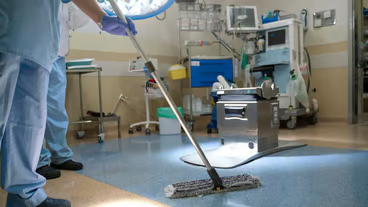
Unique challenges faced by hospital cleaners
Cleaning in a hospital setting comes with its own set of challenges. Unlike other environments, hospitals are always bustling with activity. Cleaners must work around patients, doctors, and visitors while ensuring that cleaning protocols are consistently followed. It’s a complex dance of efficiency and caution.
Moreover, hospital cleaners often face potential exposure to hazardous materials. In patient care areas, they may encounter blood, bodily fluids, and other biohazards. Therefore, thorough training in handling biohazardous waste is essential for hospital cleaning crews to ensure their safety and that of others.
Time constraints also play a significant role. With the need for constant cleanliness, janitorial staff must find efficient ways to balance thorough cleaning with limited time resources, especially in high-traffic areas. Effective scheduling and smart use of equipment can help alleviate some of these challenges.
Cleaning standards in healthcare facilities
Healthcare facilities must comply with stringent cleaning standards set by regulatory bodies. The Occupational Safety and Health Administration (OSHA) and the CDC provide guidelines that govern the cleaning process in hospitals. Compliance with these standards is crucial for legal and safety reasons.
Every hospital usually develops a comprehensive cleaning plan, which includes the frequency of cleaning specific areas, the required cleaning agents, and procedures outlined in detail. For instance, operating rooms and intensive care units have the highest cleaning standards due to the vulnerability of patients in these areas. Often, these locations require terminal cleaning, a thorough process that minimizes contamination risks after procedures.
Moreover, hospitals often incorporate Systematic Cleaning Audits to ensure adherence to cleaning protocols. These audits involve checking the performance of cleaning staff and the effectiveness of cleaning methods, providing valuable feedback that helps maintain optimal hygiene levels.
Innovations in hospital cleaning practices
Technological advancements are continually shaping the way janitorial cleaning is performed in healthcare settings. One significant trend is the adoption of green cleaning practices that utilize environmentally friendly cleaning products. This innovation not only reduces the risk of chemical exposure but can also improve indoor air quality, benefiting both patients and staff.
Furthermore, robots are increasingly being used for cleaning tasks. These autonomous machines can navigate hospital corridors to sanitize floors, providing a level of consistency that can be hard to achieve manually. Some hospitals have also introduced ultraviolet (UV) light technology for disinfection, which can kill pathogens quickly and effectively without harmful chemicals.
In addition to these technologies, infection control software is gaining popularity in tracking cleaning efficiency. This software allows hospitals to monitor cleaning processes in real-time, ensuring compliance with hygiene protocols and enabling quick adjustments as needed. Such innovations promise to enhance the overall effectiveness of hospital cleaning services.
Enhancing patient satisfaction through cleanliness
Patient satisfaction is gaining significance in hospitals as it directly impacts funding, reputation, and overall quality of care. A clean environment plays a crucial role in shaping patients’ perceptions. Studies show that a well-maintained hospital can increase patient satisfaction scores significantly, making cleanliness a priority for hospital administrations.
Hospitals often conduct patient surveys to assess perceptions of sanitation. Results consistently indicate that cleanliness is one of the top factors influencing overall patient satisfaction. This reality pressures hospitals to invest in rigorous janitorial services to meet both health and aesthetic standards. When patients feel that they are in a clean and safe environment, they are more likely to trust the care they receive, leading to better health outcomes and encouraging word-of-mouth recommendations.
Thus, hospital janitorial cleaning not only protects health but also builds a reputation, fostering a positive image that attracts and retains patients in a competitive healthcare landscape.
The role of hospital janitorial cleaning is multi-faceted, encompassing infection control, adherence to strict standards, and innovations that improve practices. While cleaning in hospitals presents unique challenges, its importance in maintaining a clean, safe, and welcoming environment cannot be overstated. As healthcare environments continue to evolve, so too will the practices and technologies surrounding janitorial cleaning, making it a critical element in delivering quality healthcare services. Through effective cleaning practices, hospitals can enhance patient safety, satisfaction, and overall health outcomes.